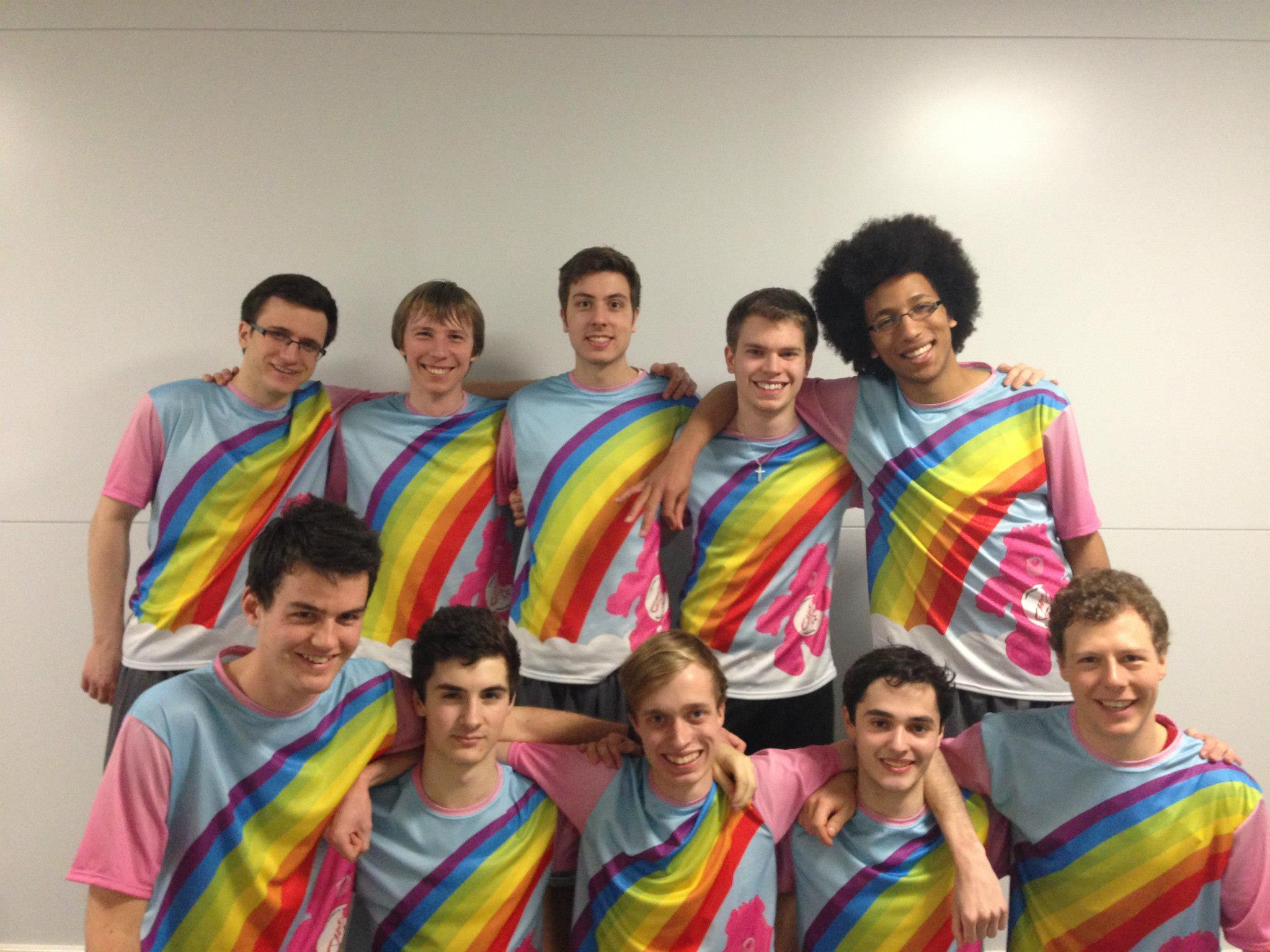
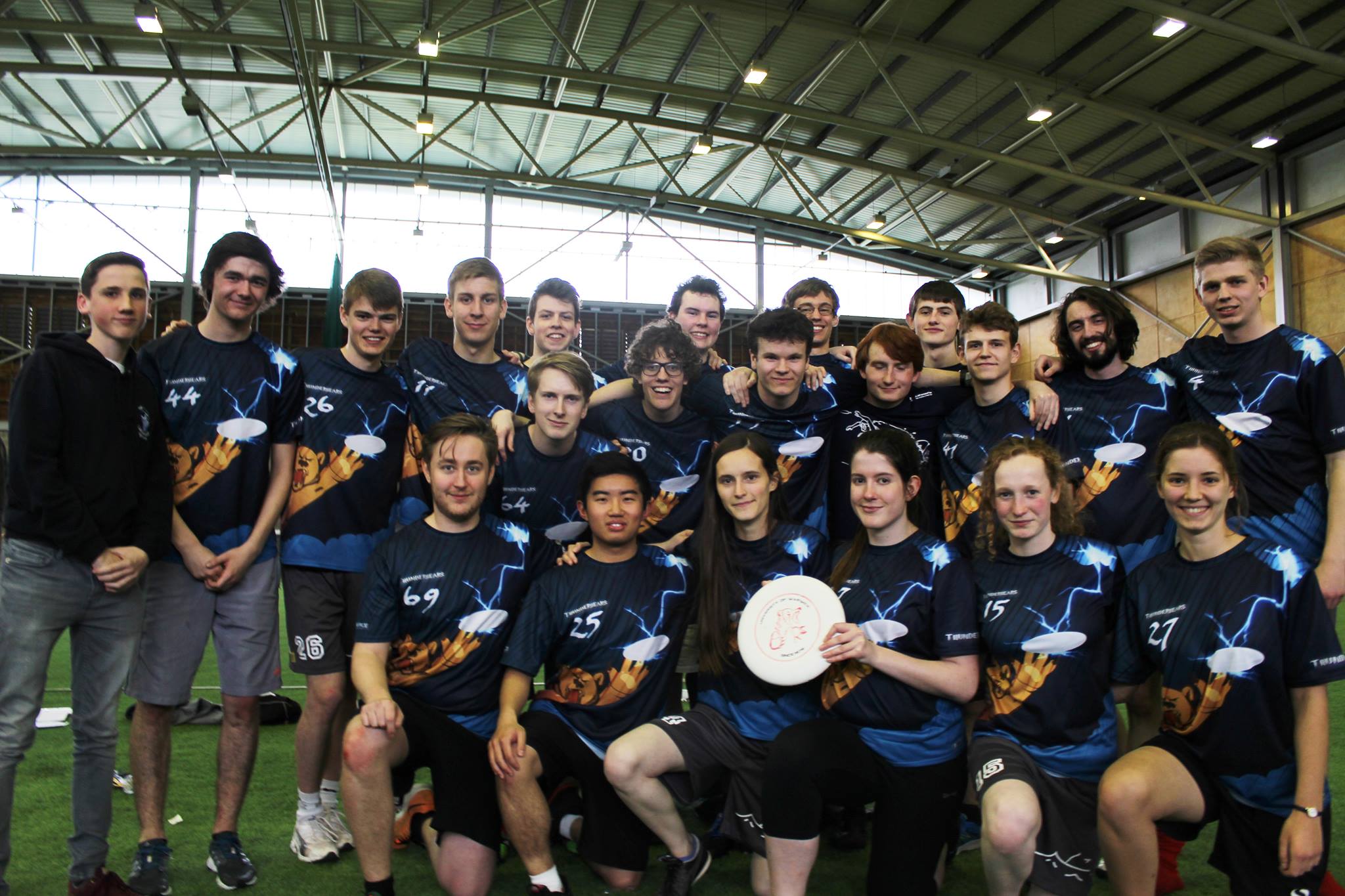
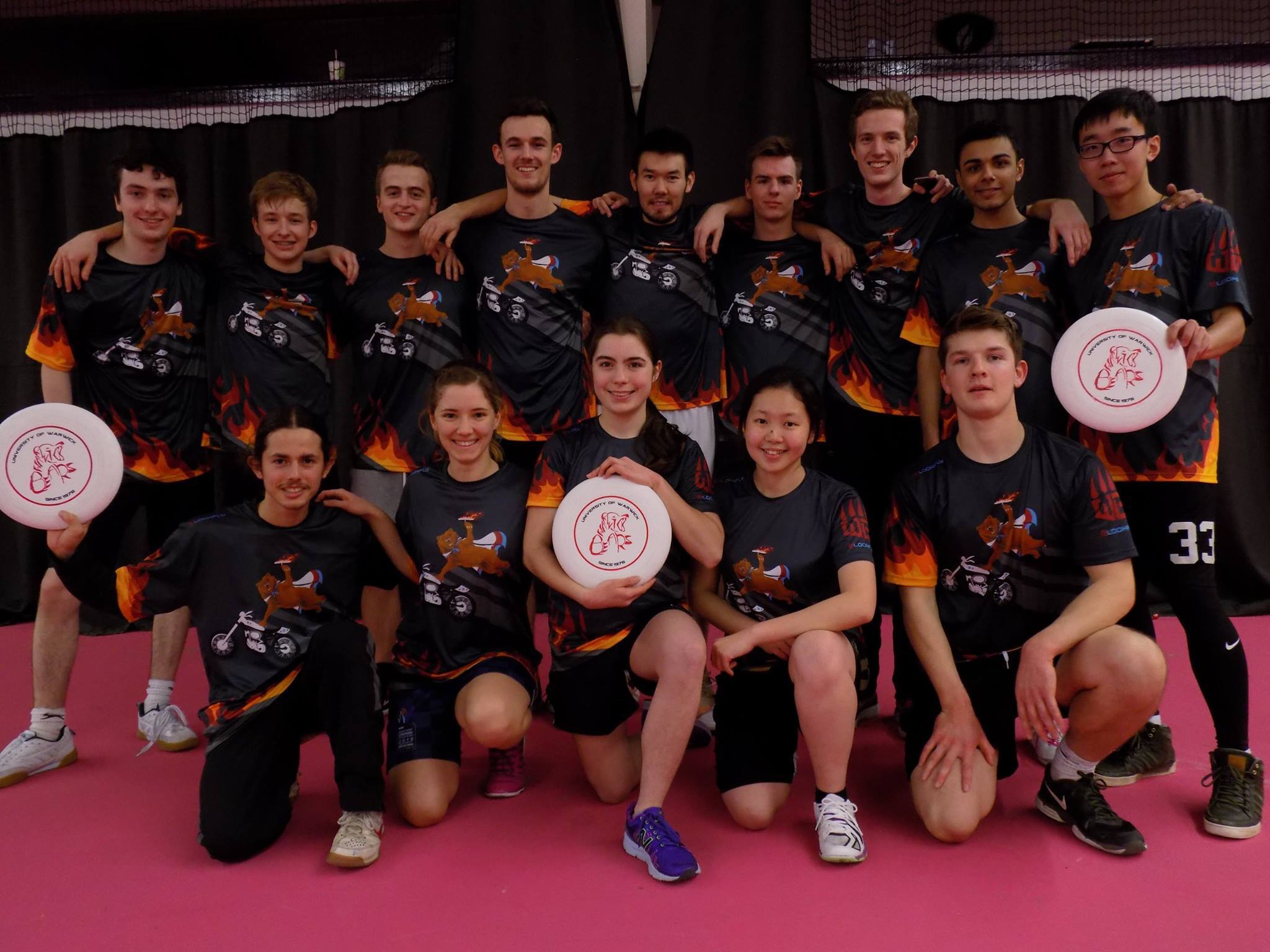
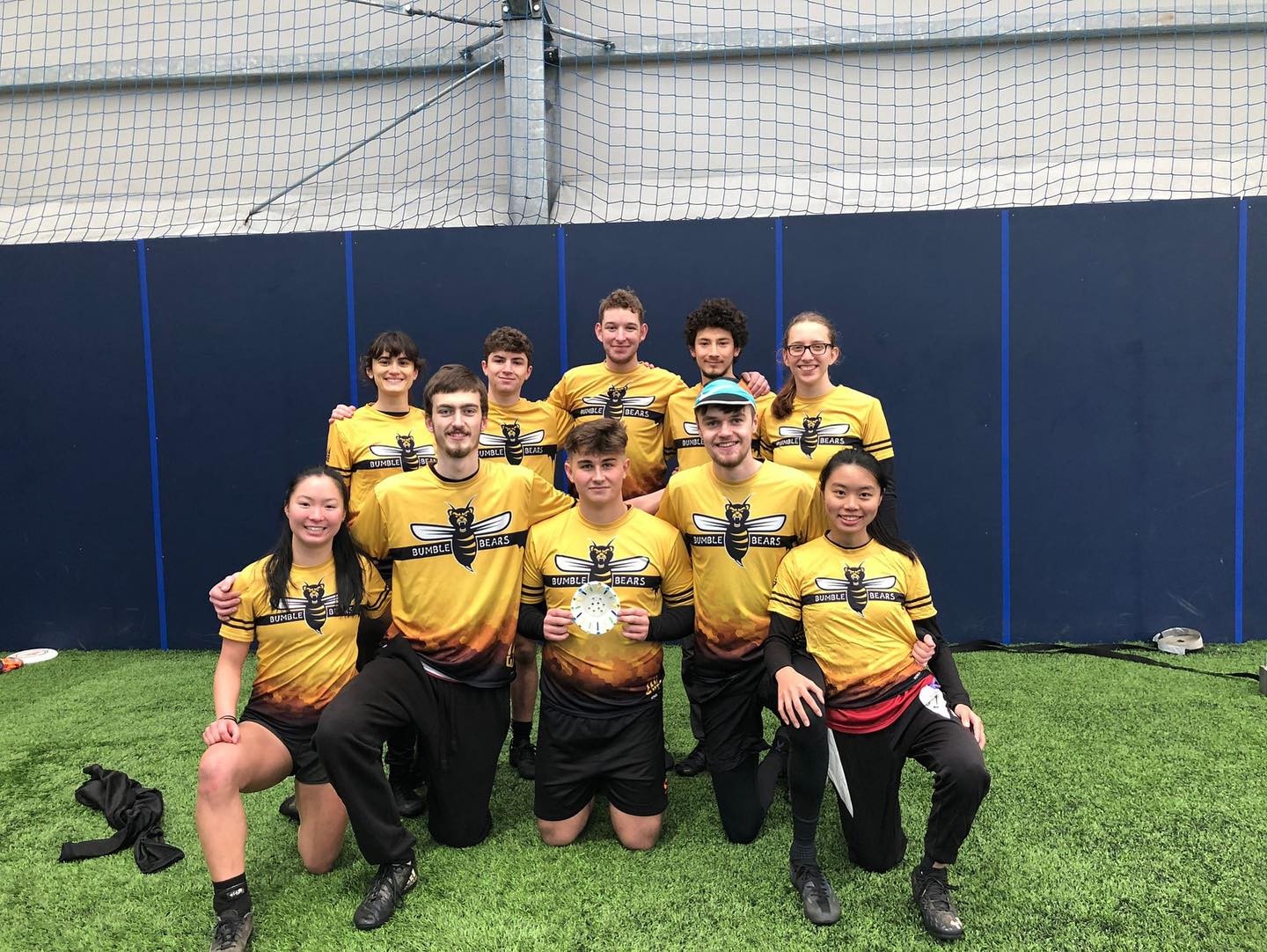
This history has been pieced together from the memories, photographs and archives of Bears past and present, with a huge contribution from ourAlumni Facebook Group. There are bound to be things we’ve missed, so if you have a story, photo or correction to add, please share it with the group!
The 1970s
Warwick Bears started in October 1976, when Richard Hicks arrived at the University of Warwick and decided to start a club for a sport that was barely known in Britain: Ultimate.
Richard had already been playing with school friends in West London, forming a team called Red Star Hillingdon. They played in one of the early UK Frisbee Championships, at a time when there were only a handful of teams playing Ultimate in Britain.
When the group went off to university in October 1976, Richard came to Warwick and founded Warwick University Frisbee Club. Several of his school friends went to Cambridge and started a club there too.
Warwick was suddenly part of a very small group of pioneering teams. Richard later recalled that there were only three other teams for Warwick to play: Cambridge University, Purley High School and the Ally Pally Tossers. In Warwick’s first season, the club played just two competitive matches, losing to Cambridge away before winning the return game by a single point.
Ultimate was still very much a new sport in Britain. The first UK clubs included Warwick Bears, Ally Pally Tossers, Purley School, Victims and Samurai.
The early competitions were quite different from those we know today. The 1977 “National Championships”, for example, were a one-day event in Dulwich combining Ultimate with individual disc sports such as distance, accuracy and Maximum Time Aloft.
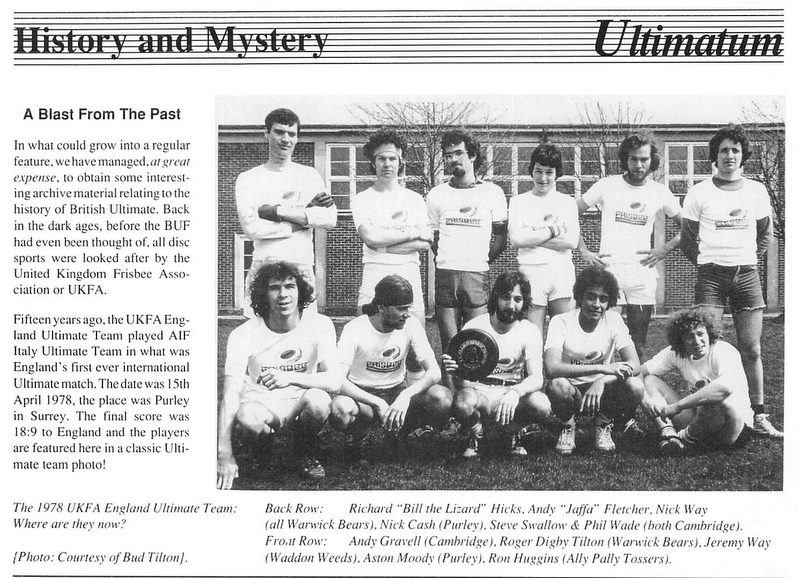
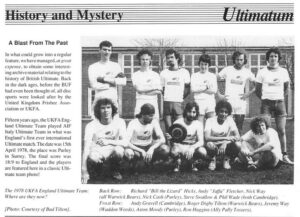
Things developed quickly. By 1978, Bears players were representing England.
Bears representing England. Richard Hicks (top left) founded Warwick Bears in 1976
By 1979, Warwick were able to claim the title of European Champions. The early European competition was very different from today’s European championships, but it remains an impressive achievement for a club that had only existed for three years.
Bears at the 1979 European Championships
Bears at 1979 European Championships
Bears at 1979 European Championships
In 1979 the first “Windoors” tournament was run which we believe is the oldest continually running tournament in Europe, and probably one of the oldest in the world.
The 1980s
During the 1980s, Ultimate began to grow into a more organised sport in Britain. The British Ultimate Federation was established in the mid-1980s, while international competition expanded with European and World Championships.
In 1981, Bears reached the final of the National Student Ultimate Championship at Loughborough, finishing runners-up to Oxford.
Then, in March 1985, Warwick hosted the seventh British National Indoor Ultimate Championship at the University’s Sports Centre. 81 matches were played over the weekend, with Warwick winning the men’s final against Battersea Boleros. The trophy was presented by Warwick’s Vice-Chancellor, Jack Butterworth.
British National Indoor Ultimate Championship 1985
British National Indoor Ultimate Championship 1985
British National Indoor Ultimate Championship 1985
British National Indoor Ultimate Championship 1985
Warwick’s Vice-Chancellor, Jack Butterworth awarding the trophy
Footage from Windoors 1989:
The 1990s
The 1990s saw British Ultimate grow rapidly, with more clubs, more organised competition and a much stronger national scene. Bears remained competitive at university level, finishing runners-up at University Nationals in 1993–94, fourth in 1994–95, and third in 1999–2000.
As players graduated, many carried Ultimate with them. Former Bears helped found and develop teams across Britain, including STAN, which became one of the leading British club teams of the period and a major challenger to the dominant Hombres. Other alumni teams included UTI, Whiplash and Mexican Horse Bandits. A contemporary history of British Ultimate went so far as to describe Warwick as one of the most dynamic forces in the development of the sport, noting that ex-Warwick players were also involved in establishing the British Ultimate Federation, British Disc Golf Association and Ultimatum, the British Ultimate newsletter.
Meanwhile, the wider game was becoming more structured. In 1997 the BUF introduced the Ultim8 Tour, creating a league-style competition between teams of similar ability and helping drive the growth of club Ultimate in Britain.
Windoors also became a fixture on the university Ultimate calendar.
The 2000s
The 2000s brought a new era for both Bears and British Ultimate. The sport was growing rapidly, and in 2006 Ultimate gained recognition from BUSA, giving university competition a more formal national structure.
By the middle of the decade the club was entering multiple teams and competing across Open, Women’s and Mixed divisions. The late 2000s were particularly successful: Bears won the University Mixed title in 2007–08, 2008–09 and 2009–10, while the Women’s team won the University Outdoor title in 2008–09 and 2009–10. The Open team also won University Nationals in 2007–08 and 2008–09.
The club’s 30th anniversary in 2007 brought almost 100 current and former Bears together for a hat tournament and anniversary ball.
By then, the club was recruiting around 150 freshers each year and had won more than five tournaments during its anniversary year, including both Open and Women’s university indoor regionals.
The 2010s
Ultimate has grown enormously, both in Britain and around the world. University Ultimate is now far more competitive, and Bears has grown into a large club with Open, Women’s and Mixed teams, as well as a packed tournament and social calendar.
The club enjoyed a long-running rivalry with Coventry in Varsity, with Warwick winning the fixture year on year. Bears were also regularly able to take multiple teams to University Nationals, another sign of the size and depth the club had developed.
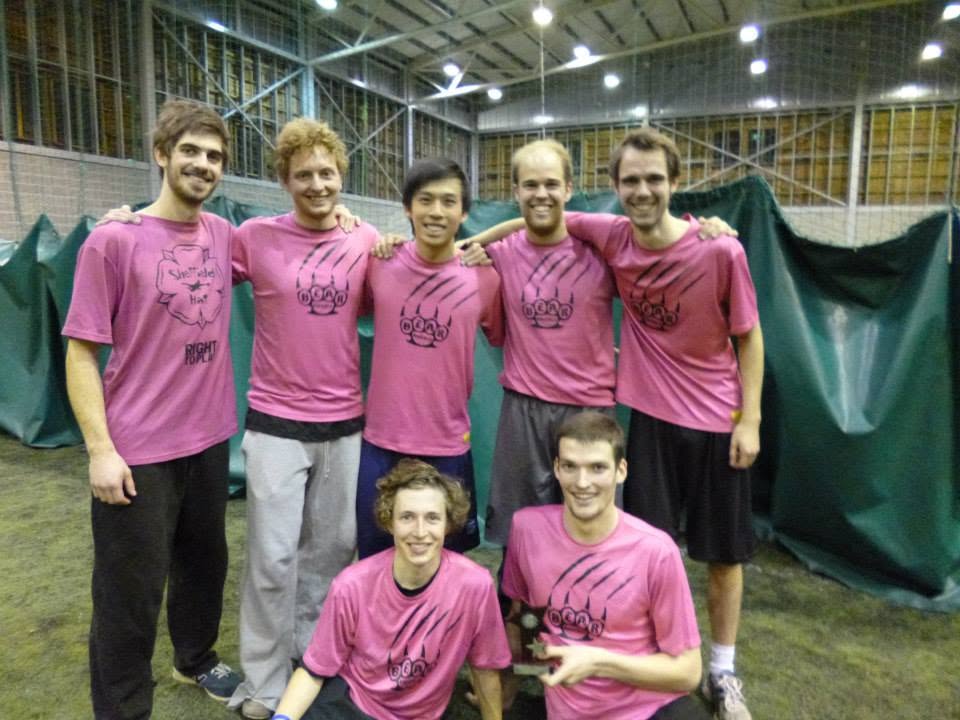
Windoors 2014
Outdoor Nationals 2018
Burla 2017
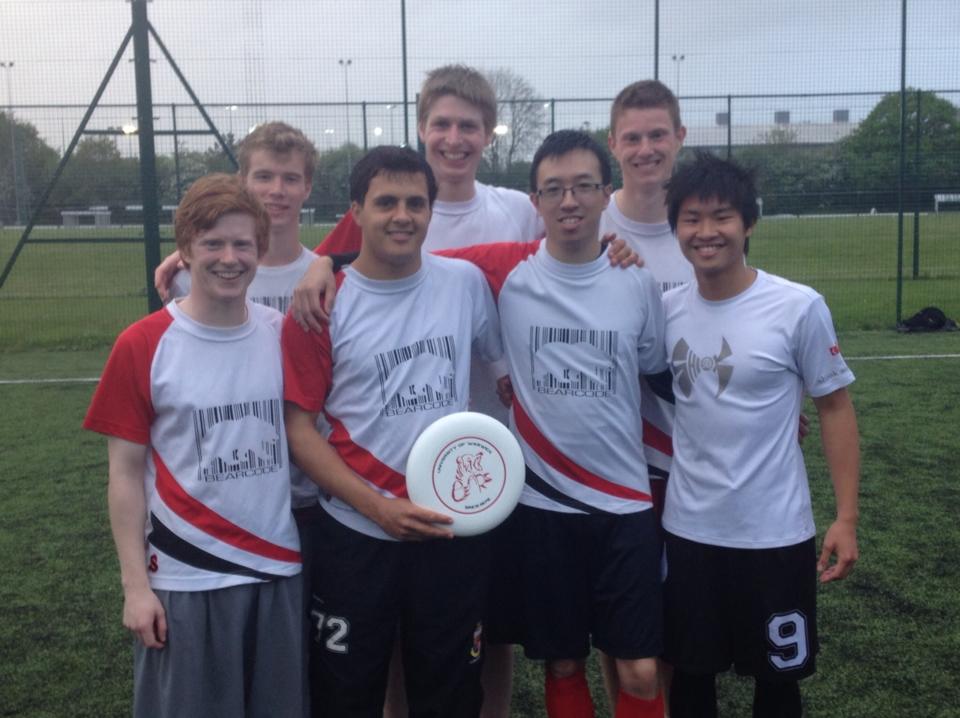
Outside of the University scene, former Bears began to form and play for Bear Cavalry, an alumni-heavy mixed team that became one of the dominant forces in British mixed Ultimate. They won UK Mixed Nationals in 2011, 2012 and 2013, and in 2013 went one step further, winning the European Club Finals in Bordeaux. The team also took on the world, representing the UK at the 2014 World Ultimate Club Championships in Lecco, Italy, where they finished 12th in a 48-team Mixed division.
Bear Cavalry in 2014:
The 2020s
The 2020s began with the biggest disruption the club had faced in decades. The COVID-19 pandemic brought competitive Ultimate to a halt, forcing Bears to find new ways to keep the club going. In spite of this, Windoors moved online, using a virtual disc game to keep the tournament tradition alive.
When university Ultimate returned, Bears were quickly back competing. In 2021, Bears reached the latter stages of the UK University Mixed Nationals, beating Leeds 8–2 on the way to a top-eight finish.
The club has since continued to grow, with Open, Women’s and Mixed teams, regular tournaments and a busy social calendar. Today, Bears remains one of the UK’s longest-running Ultimate clubs and continues to compete at the top end of university Ultimate.
In 2026, Bears celebrated its 50th anniversary. The club continues to field Open, Women’s and Mixed teams, run Windoors and bring together new generations of players every year.
The Bears archive
There’s much more to Bears history than can fit into one article. We’ve collected photographs, newspaper cuttings, old kits, tournament footage and memories from generations of Bears.
Bears who went on to be internationally capped
Over the years, dozens of former Bears have represented their country (Great Britain unless specified) at senior level.
Player
Bears years
Richard Hicks
1976–79
Bud Tilton
—
Toby Green
1977–80
Derek Robins
1979–82
Graeme Duckworth
1979–82
Tim Sparks
1979–82
Dave Sykes
—
John Domingue
1980–83
Sam Neilson
—
Jim Edwards
—
Marian Major
—
Jill Marsh
—
Cara O’Donnell (Davenport)
—
Ivan Bromage
—
Tony Wakeford
1982–85
Tony Boud
—
Tim Fox
1983–86
Sue Underwood
—
Dave Bluck
—
Miles Kelvin
1987–90
Ian Stebbing
1986-89
Dave Hardisty
—
Rowan Thornewill
—
Ged Boydell
—
Greg Cawood
—
Steve Nixon
—
Wayne Davey
1985–88
Jackie Potter
1986–89
Kathleen O’Hara
—
Harry Golby
1988–92
Rachel Maybury
—
Shirley Fuller
—
Liz Smith
—
Danny Baker
1988–91
Guy Bowles
—
Mark Perryman
1991–94
Andy South
1991–93
Steve Shipley
1990–94
David Stobbs
2001–09
Joe Thompson
—
James Freeman
—
Matt Ford
2000–03
Tom Abrams
2007–10
Andrew Hillman
2011–14
Hannah Yorwerth (Beach)
2017–21
Jasmine Brian-Boys (Beach)
2018–25
Neil McCulloch (Indoors)
2016–20
Daniel Wilson (Indoors)
2017–21
Luke Haywood (Indoors)
—
Presidents and Captains
Season
President
Men’s/Club Captain/Coach
Women’s Captain/Coach
1977/78
Richard “Bill the Lizard” Hicks
Andy “Jaffa” Fletcher
—
1979/80
—
Toby Green
Penny Dane
1980/81
Paul Macer-Wright
Pete Hetherington
Caroline Shaw (?)
1981/82
Derek Robins
Graeme Duckworth
—
1982/83
—
Phil Tattersall (?)
—
1983/84
Sam Neilson
Jim Edwards
—
1984/85
Alan Groucott (?)
Tony Wakeford
—
1985/86
Paul Hurt
Tim Fox
—
1986/78
—
Steve Nixon
—
1987/88
—
Wayne Davey
—
1988/89
Jackie Potter?
Dave Hardisty
—
1989/90
Danny Baker
Harry Goldby
—
1990/91
Andy South
Harry Goldby
—
1991/92
—
Richard
—
1992/93
Gavin Ailes
Steve Shipley
—
1993/94
Gavin Ailes
Mark Perryman
—
1994/95
Colin Wagstaff
Rik Shipley
—
1995/96
Andy “Norm” Tucker
Rik Shipley
—
1996/97
Ralf Doswell
Hywel Davies / Mark Jefferson
—
1997/98
Satvik Chotai
Jim Ayrton
—
1998/99
Mike “Percy” Clements
Mike Saxton
—
1999/00
Sarah Kirwan
Mark Challis
—
2000/01
Med Bridges
Ali Darren
Lizzy Kingston
2001/02
Mike Dodd
Taz AlRasheed
Alexia George
2002/03
Tim Capel
James “Troy” McClure
Marrianne Rees
2003/04
Ben Harris
Joel Woods
Sarah Bunnie
2004/05
James “Scouse” Walker
Dave Marshall
Vidhya Siva
2005/06
Nick Hudgell
David “Thrash” Stobbs
Sarah Brown
2006/07
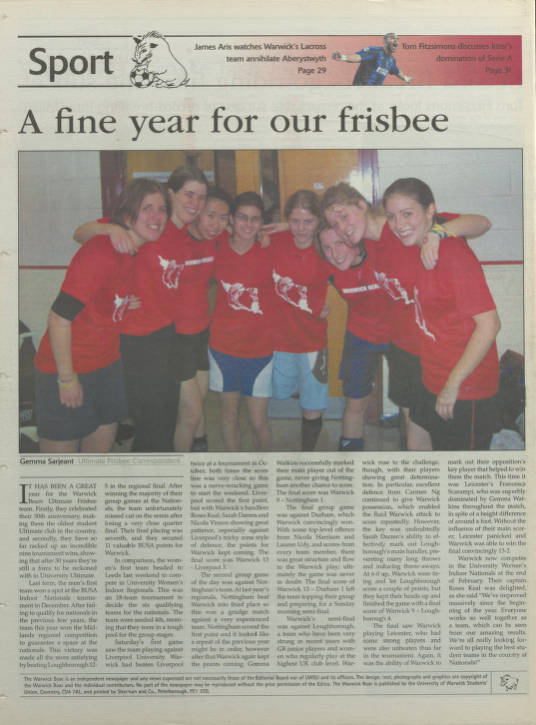
Gemma Sarjeant
Dan Masoliver
Roses Keal
2007/08
Ryan John
Terry Conquest
Gemma Watkins
2008/09
Dave Gill
Dave Tyler
Lauren Tyler
2009/10
Adam Maxwell
Simon Smiley
Lizi Blackburn
2010/11
Hayden Cole
James Freeman
Hayley Summers
2011/12
Mark Jones
Joe Thompson
Rebecca Hale
2012/13
Rebecca Hale
Robbie Tink
Ronja Wöestheinrich
2013/14
Rory Hughes
Samuel Hawkins
—
2014/15
Hamza Alawiye
Jack Skipper
Kat Rantanen
2015/16
Peter Weightman
Romit Patel
—
2016/17
Cathy Hensman
George Siddens
Leia Turner
2017/18
Will Bolton
Willem Garnier
Ellen Daly
2018/19
James Taylor
Adam Carver / Daniel Wilson
Hannah Yorwerth
2019/20
Lara Nash
Daniel Wilson / Neil McCulloch
Jasmine Brian-Boys
2020/21
Scott Johnson-Corney
Hannah Yorwerth / Oli Heinrich
Phoebe Asplin
2021/22
Jessie Liu
Kenji Terao / Colin Scott
Phoebe Asplin
2022/23
Rae Lee
Colin Scott / Will Skeldon
Trish Medina
2023/24
Phoebe Asplin
Will Skeldon / Hong Au
Jasmine Brian-Boys
2024/25
Ed Mace
Yong Xu Lim / Luke Haywood
Patricia Medina
2025/26
Josh Lacy
Andy Jiang / Josh Hughes
Liam Lu / Beth Jeffrey
2026/27
Josh Lacy
Boran Sahin / Rory Thornton
Janna Chen / Liam Lu / Beth Jeffrey
Bears year group teams
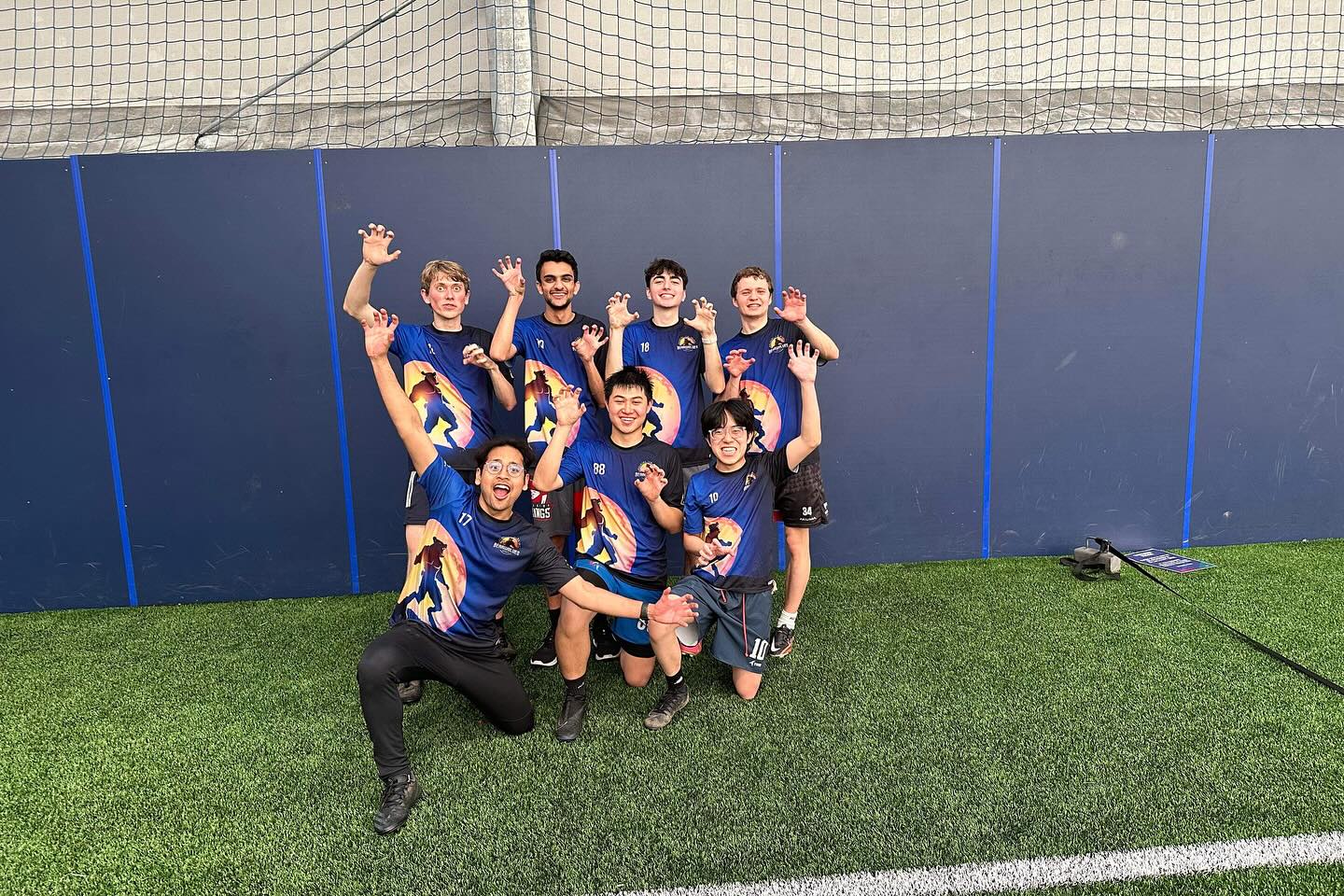
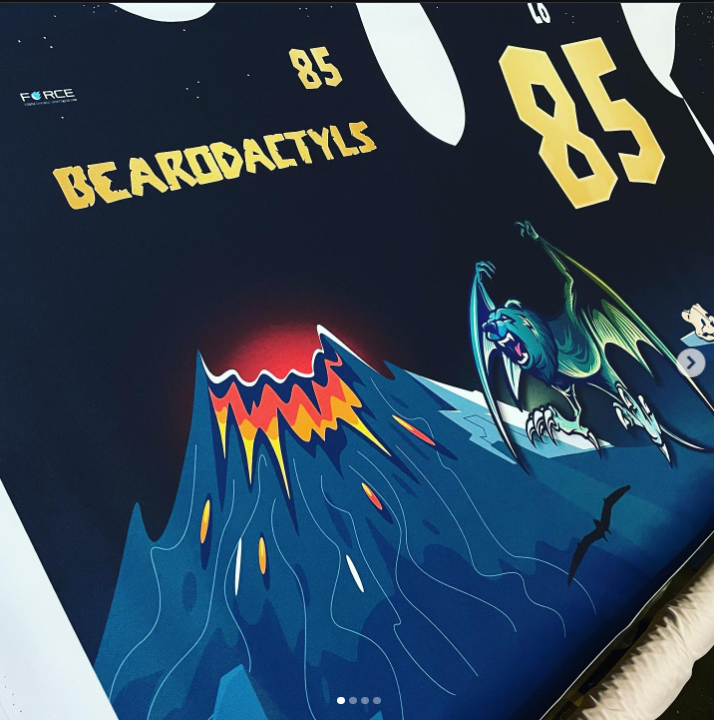
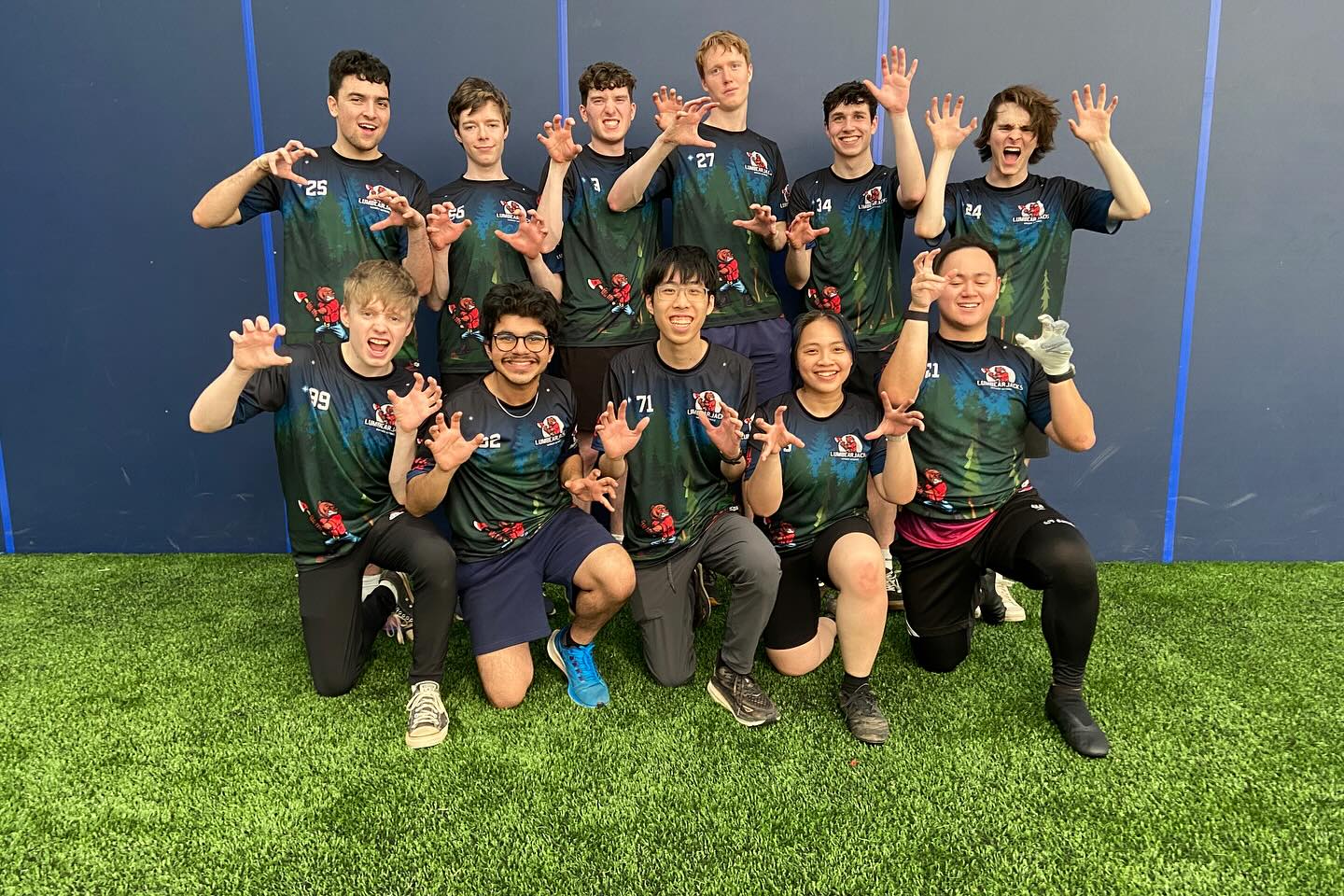
Since 1997, every generation of bears gets a name. Some are better than others.
Pre 2005, teams tended to form on graduation and there was more year-year crossover. From 2005, teams tended to be formed from those entering uni / the club in that year, during their time at uni, and there was less year-year crossover.
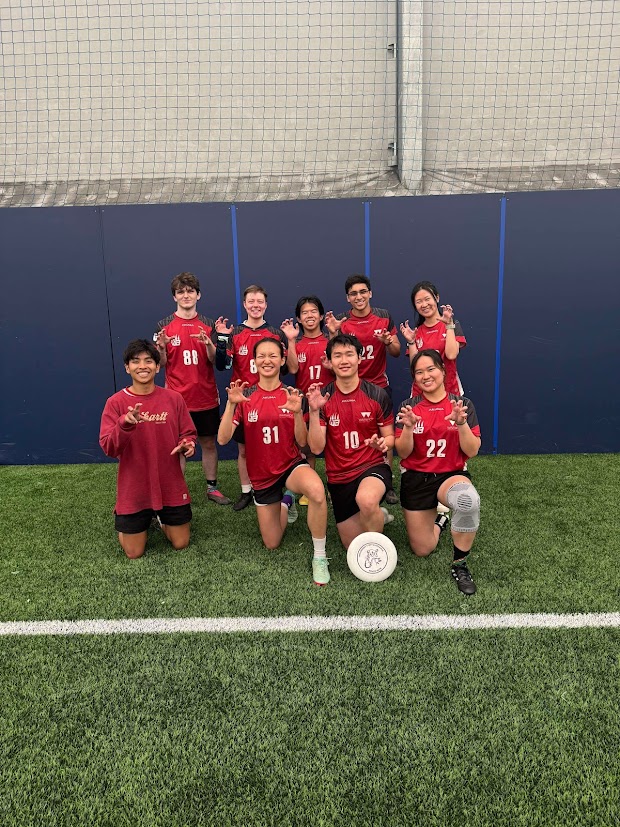
The Bears name and red-and-black identity have been around from the beginning.
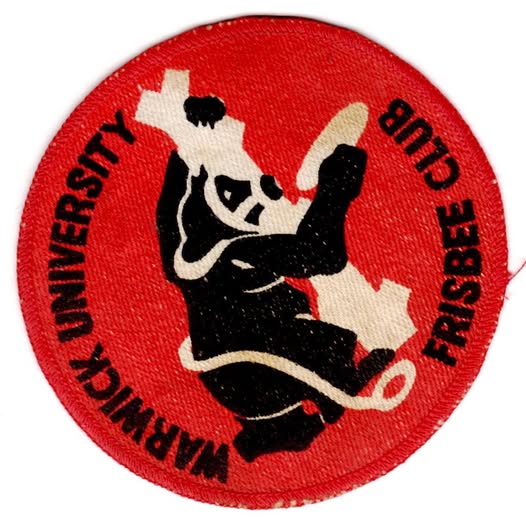
The original badge was designed by Llewellyn Thomas, an Art History undergraduate at Warwick. The newer disc logo was designed by Becca Hale (’12/13 President).
Original Badge by Llewellyn Thomas:
If you’ve got an old Bears photo, programme, newspaper clipping, tournament result, kit or just a story that should be remembered, we’d love to hear from you.
Source
60 in 60: Warwick’s Diamond Anniversary in 60 Images, https://warwick.ac.uk/services/library/mrc/exhibitions/exhibitionsonline/60in60/.
Batchelor, Adam. “Fluid Druids 1981-2003 R.I.P.” Ultimatum, 2003, https://malago.co.uk/PDF/ultimatum2003.pdf.
“A brief history…” UK Ultimate, UK Ultimate, https://blog.ukultimate.com/what-does-uku-do/a-brief-history.
Brown, Luke. “Varsity clockwatch: DAY FOUR.” February 2015, https://theboar.org/2015/02/varsity-clockwatch-day-four/.
Cole, Hayden. “Nationals disappointment for Men’s Ultimate Frisbee after impressive qualification.” The Boar, May 2012, https://theboar.org/2012/05/nationals-disappointment-mens-ultimate-frisbee-aft/.
Goolden, Jack. “All you need to know about British Ultimate.” Ultimatum, 2002, https://malago.co.uk/PDF/ultimatum2002.pdf.
Soedira, Felix. “UK Not University Mixed Nationals: Tournament Recap.” Ultiworld, September 2021, https://ultiworld.com/2021/09/14/uk-not-university-mixed-nationals-tournament-recap/. Accessed 21 August 2026.
Thomas, Ali. “Bears savour success after a truly ultimate weekend!” The Boar, November 2016, https://theboar.org/2016/11/warwick-bears-savour-success/.
 Bears at 1979 European Championships
 Bears at 1979 European Championships


 British National Indoor Ultimate Championship 1985
 British National Indoor Ultimate Championship 1985
 British National Indoor Ultimate Championship 1985
 British National Indoor Ultimate Championship 1985
 Warwick’s Vice-Chancellor, Jack Butterworth awarding the trophy


 Windoors 2014
 Outdoor Nationals 2018
 Burla 2017